Study in Canada From Nepal: Best Guide for 2026

Study in Canada From Nepal: Best Guide for 2026

Is Canada good for Nepali students? The answer is a resounding yes. Canada remains a top-tier destination for Nepali students seeking globally recognized degrees, affordable tuition, and clear pathways to long-term career success. Compared to the USA, UK, or Australia, Canada offers highly practical education with paid co-op internships built into many degrees and robust post-graduation work opportunities.

If you are planning to study in Canada from Nepal, navigating the shifting immigration landscape is critical. From calculating the total cost to study in Canada from Nepal to understanding the latest requirements to study in Canada from Nepal, this comprehensive 2026 guide covers everything. We will break down the post-SDS visa process, the new Provincial Attestation Letter (PAL) rules, and exactly what the Canada student visa success rate from Nepal 2026 looks like for incoming students.

Quick Facts: Studying in Canada (2026 Updates)

To give you an immediate overview of the study in Canada from Nepal requirements, here are the critical facts and IRCC policy updates for the 2026 academic year:

  • Average Tuition: CAD 12,000 – CAD 35,000 per year (approx. NPR 11.5 Lakhs – 33.5 Lakhs).
  • Mandatory Living Funds (GIC): CAD $22,895 minimum (Updated 2026 requirement).
  • Off-Campus Work Limits: 24 hours per week during academic sessions.
  • Major Intakes: Fall (September), Winter (January), Summer (May).
  • Minimum IELTS: 6.0 Overall (Diplomas/UG) | 6.5 Overall (Master’s/PG).
  • Visa Processing Stream: Standard Application Stream (the Student Direct Stream / SDS is officially closed).
  • Post-Graduation Work Permit (PGWP): Up to 3 years. (Master’s graduates now automatically qualify for 3 years, regardless of program length).

Visa Success Rate for Canada From Nepal 2026

One of the most frequently asked questions from parents and applicants is regarding the student visa success rate for Canada from Nepal.

Following a period of sweeping policy changes by the IRCC (Immigration, Refugees and Citizenship Canada), the landscape has stabilized. The Canada visa success rate in Nepal 2026 is looking highly positive for well-prepared applicants. As of late 2025 and moving into 2026, the visa success rate of Canada from Nepal sits securely between 57% and 65% for complete, genuine applications.

Why is the Canada visa rate from Nepal 2026 improving?

  1. Clearer Guidelines: The introduction of the study permit cap (~155,000 for 2026) and the PAL system means that if you secure your documents, your seat is virtually guaranteed.
  2. Higher Quality Applications: Students are submitting stronger Statements of Purpose (SOP) and genuine financial documents, which directly boosts the Canada student visa success rate from Nepal.
  3. Graduate Exemptions: As of January 1, 2026, Master’s and PhD students applying to public universities are completely exempt from the study permit cap and the PAL requirement, drastically streamlining their approval process.

If you submit a flawless application, clearly prove your financial capacity, and choose a course relevant to your previous studies, your visa rate to Canada from Nepal 2026 is exceptionally high.

Total Cost to Study in Canada From Nepal

When planning an abroad study in Canada from Nepal, budgeting correctly is the most crucial step. While it is generally more affordable than higher education in the US or Australia, you must prepare for both tuition and mandatory living expenses to meet the strict Canada student visa requirements from Nepal.

1. Estimated Annual Tuition Fees

Program Level

Average Fees (CAD)

Approximate Fees (NPR)

Diploma & Advanced Diploma

$13,000 – $19,000

12.5 Lakhs – 18 Lakhs

Bachelor’s Degree

$18,000 – $28,000

17 Lakhs – 27 Lakhs

Master’s Degree / PG Diploma

$20,000 – $35,000

19 Lakhs – 33.5 Lakhs

2. Living Expenses & The GIC Requirement (Critical 2026 Update)

To secure a student visa for Canada from Nepal, you must prove you can support yourself without relying on part-time work. You are required to show liquid funds, most commonly through a Guaranteed Investment Certificate (GIC) from a participating Canadian bank.

  • The new minimum living expense requirement is CAD $22,895 (approximately NPR 22 Lakhs). This money is locked in a Canadian account and disbursed back to you in monthly installments over your first year to cover rent, food, and transport.
  • Total Funds Needed: For your visa application, you must show the CAD $22,895 plus the receipt proving you have paid your first year of tuition.

Academic & Language Requirements by Program

Canadian institutions maintain high academic standards. Before applying, you must understand exactly how much GPA is required to study in Canada from Nepal.

Study in Canada After 12th for Nepalese Students (Undergraduate)

If you want to pursue a diploma or Bachelor’s degree straight out of high school, here is what you need:

  • Minimum GPA Required for Canada from Nepal: You need a minimum GPA of 2.8 (or 60%) in your +2 (NEB) or A-Levels. Highly competitive universities may require a 3.0 or higher.
  • Language: An IELTS score of 6.0 overall (with no band less than 5.5 or 6.0 depending on the specific college). PTE (usually 58-60) and TOEFL are also widely accepted.
  • Documentation: A Provincial Attestation Letter (PAL) is mandatory for undergraduate visa filing.

Master’s & PG Diploma Programs (Graduate)

  • Minimum GPA: A recognized 3 or 4-year Bachelor’s degree with a minimum CGPA of 2.8 to 3.0. Highly competitive programs (like Data Science, Engineering, or an MBA) prefer a 3.0+.
  • Language: An IELTS score of 6.5 overall (no band less than 6.0).
  • Documentation: A comprehensive Statement of Purpose (SOP), 2-3 Letters of Recommendation (LORs), and an updated CV.

Need Help Preparing for Your Language Test?

Securing a high IELTS or PTE score is the most critical step for your Canadian university admission and visa approval. At CIC Education Hub, we provide expert-led, intensive test preparation tailored to your current English proficiency.

Whether you prefer morning, day, or evening shifts, you can join our highly rated preparation classes at a branch nearest to you:

Our certified trainers provide realistic mock tests, personalized feedback, and the latest study materials to ensure you hit that 6.5+ band requirement on your first attempt.

Intakes and Application Deadlines for 2026

Timing is everything when you decide to study Canada from Nepal. Canada offers three major intakes, allowing flexibility depending on when you complete your academic prerequisites.

1. Fall Intake (September)

  • The Best Option: This is the primary intake for all Canadian universities. It offers the largest selection of courses, the most robust funding options, and ideal weather for new arrivals.
  • Deadline: Apply between November 2025 and March 2026.

2. Winter Intake (January)

  • The Secondary Option: A great alternative if you missed the Fall deadline. Many business, IT, and diploma programs are available.
  • Deadline: Apply between July and September of the previous year.

3. Summer Intake (May)

  • The Limited Option: Only a select few colleges offer a May intake, usually reserved for short-term diplomas or fast-tracked tech and business courses.
  • Deadline: Apply between October and January.

Expert Tip: To maximize your Canada student visa success rate from Nepal 2026, start your IELTS and documentation preparation at least 8 to 10 months before your desired intake.

Scholarship for Nepalese Students in Canada

While Canada does not offer fully tuition-free universities for international students, finding a scholarship for Nepalese students in Canada is entirely possible and can drastically reduce your financial burden.

  • Canada Graduate Scholarships-Master’s Program (CGSM): Awards up to CAD $17,000 for international students engaged in high-level research.
  • Vanier Canada Graduate Scholarship: One of the most prestigious awards, offering up to CAD $50,000 per year for doctoral students.
  • University-Specific Entrance Awards: Many universities automatically assess incoming Nepali students in Canada for entrance scholarships. Depending on your high school or Bachelor’s grades, these can range from CAD $1,000 to $5,000 applied directly to your first-year tuition.

Step-by-Step Canada Student Visa Process From Nepal

Because the IRCC closed the Student Direct Stream (SDS) program, the Canada student visa process from Nepal now requires all students to apply through the standard stream. The digital application process is efficient but requires strict attention to detail.

  1. Secure an Offer Letter: Apply to a Designated Learning Institution (DLI) and receive your Letter of Acceptance (LOA).
  2. Obtain your PAL (If Applicable): Your university will apply to the province on your behalf to secure your Provincial Attestation Letter. (Master’s and PhD students bypass this step).
  3. Pay Tuition & Open a GIC: Transfer your first year’s tuition to the institution, and wire CAD $22,895 to a Canadian bank to secure your GIC certificate.
  4. Prepare Medicals & Police Clearance: Undergo an upfront medical exam (IME) at an IRCC-approved clinic in Nepal (e.g., IOM in Baluwatar) and obtain a police clearance certificate.
  5. Lodge Visa Application: Submit your documents online via the IRCC portal. Include a personalized SOP explaining your study intent and ties to Nepal. Pay the visa fee (CAD $150) and biometrics fee (CAD $85).
  6. Biometrics Appointment: Visit the VFS Global center in Kathmandu to submit your fingerprints and photograph.

Spouse and Dependent Visas (2026 Rules)

For married applicants, the ability to bring a family is a major reason why Canada for Nepali students is so appealing. However, the IRCC has recently tightened the rules regarding the Spousal Open Work Permit (SOWP).

Who can bring their spouse to Canada in 2026?

  • Master’s and PhD Students: If you are enrolled in a Master’s or Doctoral degree program at a university, your spouse is fully eligible to apply for an Open Work Permit.
  • Professional Degrees: Students enrolled in specific high-demand professional degree programs (like Medicine, Dentistry, or Law) can also sponsor their spouses.
  • Undergraduate/Diploma Students: Spouses of students in undergraduate or college diploma programs are no longer eligible for an open work permit, unless they apply for a separate visa (like a visitor visa or their own independent study permit).

Best Cities in Canada for Nepali Students

Where do Nepali students Canada thrive the most? Choosing the right province impacts your cost of living, part-time job opportunities, and future PR prospects.

1. Ontario (Toronto, Ottawa, Kitchener)

  • The Vibe: The economic powerhouse of Canada with massive tech, finance, and healthcare sectors. It boasts the largest Nepali diaspora, meaning easy access to familiar food and community.
  • The Catch: It has the highest cost of living and most competitive housing market in the country.

2. Alberta (Calgary, Edmonton)

  • The Vibe: Rapidly becoming the favorite destination for Nepali students in Canada. Alberta offers lower taxes, highly affordable housing, and booming engineering, trades, and IT sectors.

3. British Columbia (Vancouver, Victoria)

  • The Vibe: Known for its stunning landscapes, mild weather (it rarely snows in Vancouver), and a strong tech industry.
  • The Catch: Similar to Toronto, rent and living expenses are exceptionally high.

4. Atlantic Provinces (Nova Scotia, New Brunswick)

  • The Vibe: The best option for students strictly focused on PR. These provinces feature the Atlantic Immigration Program (AIP), offering streamlined PR pathways combined with the lowest tuition and living costs in Canada.

Frequently Asked Questions (FAQs)

How much gap is accepted to study in Canada?

Canadian institutions generally accept a study gap of up to 2 years for undergraduate programs and up to 5 years for postgraduate programs. However, you must thoroughly justify the gap with valid proof of work experience, internships, or language preparation in your SOP.

What is the minimum IELTS score for Canada from Nepal?

The absolute minimum is an IELTS overall score of 6.0 for diploma and undergraduate programs. For Master’s and Postgraduate diplomas, the minimum is 6.5 overall.

Can I study in Canada from Nepal without IELTS?

While IELTS is the most recognized, you can study in Canada without it if you take an accepted alternative like the PTE Academic (typically 58-60+), TOEFL iBT, or the Duolingo English Test (depending on the specific university’s requirements).

What is the post-graduation work permit (PGWP) duration?

If your program is 2 years or longer, you may be eligible for a PGWP valid for up to 3 years. Note the new 2026 rule: Graduates of Master’s degree programs are now eligible for a full 3-year work permit, even if their program of study was shorter than two years. For college diploma graduates, your field of study must align with IRCC’s eligible occupations list to qualify for the PGWP.

How many hours can an international student work in Canada?

Under the latest 2026 regulations, international students in Canada can legally work up to 24 hours per week off-campus during regular academic sessions. During scheduled academic breaks, such as the summer holidays, students are permitted to work full-time (up to 40 hours per week).


Study Engineering in Canada for International Students in 2024

Study Engineering in Canada for International Students in 2024

Engineering is one of the most ancient fields of study on this planet. Math & Science is the term that has changed this planet from its traditional state to present advancements. To Study Engineering in Canada for international students is one of the most popular study options.

Engineering courses are all about combining theoretical knowledge with hands-on experience to produce effective solutions to real-world technical problems and challenges. Engineering is a huge advancement with enormous employment opportunities all over the world.

Benefits of Study Engineering in Canada for International Students

There might be tons of queries in your mind about, Is it worth studying engineering in Canada. The points mentioned below will clear all your doubts, as International Students Why choose Canada for Studying Engineering: 

Popular Destination

Canada has become one of the most popular abroad study destinations due to its low tuition fees, high-quality education, post-study career opportunities, and worldwide recognized colleges and universities.

Quality Education

Canadian Engineering Universities and Colleges follow very high academic prerequisites and uncompromisable quality controls to ensure that students receive a high-quality education.

Internationally Recognized Degrees

Most of the Canadian Universities are ranked among the Top 20 universities in the world and the degrees and certificates provided by them are recognized all around the world. 

Budget-Friendly

While Canada’s educational and living standards are among the best in the world, overseas students will find that the cost of living and tuition costs are often lower as compared to other study destinations.

Large Engineering Domain

Canadian universities offer a wide variety of programs in the field of Engineering such as Electrical Engineering, Mechanical Engineering, Software Engineering, Aerospace Engineering, Biomedical Engineering, Civil Engineering, Geotechnical Engineering, Mining Engineering, and the list goes on.

List of Courses to Study Engineering in Canada for International Students

study engineering in Canada for International Students

When choosing a course, you should always think about your interest. The scope of the engineering course, its cost, and the universities in which the course is available are other factors as well. 

Many popular engineering courses in Canada are structured in such a way that, it assists students to solve real-world challenges in a more efficient way. Here are some of the top Specializations to study engineering in Canada for International Students:

Electrical Engineering in Canada

Electrical engineering in Canada is one of the most in-demand engineering specialties in the country. If you are an electrical engineer, your chances of getting hired in Canada are pretty good. And this will continue to be in high demand in the coming days too

Electrical engineering covers both the powering and generating electricity, as well as the design, development, maintenance, and testing of systems. Graduates of this program will be eligible to work as Electrical Engineer, Electrical Design Engineer, and so on.

Mechanical Engineering in Canada

Mechanical engineering in Canada is one of the most in-demand engineering fields in the country.

Because the role requires applying various physics principles to various elements, such as the design, production, and maintenance of mechanical systems, it is in great demand. Mining and Oil are the two of the most popular industries for mechanical engineers to work in.

Software Engineering in Canada

Software Engineering in Canada is in high demand due to its status as one of the most prominent engineering domains, especially with giant companies like Apple and Microsoft. Due to their great demand, Software Engineers are among the highest-paid engineers in Canada.

Biomedical Engineering in Canada

Biomedical Engineering in Canada is an engineering discipline that deals with the application of engineering principles and design to medicine and biology for healthcare. This urges the need for  Engineers, particularly in the biomedical industry, required to revolutionize medical advancements.

Because Canada’s major population is covered with senior citizens, there is a growing demand for trained individuals who can assist in both the medical establishment and handling the aging population. 

Civil Engineering in Canada

Civil engineering is an engineering discipline that is concerned with the design, construction, and maintenance of the physically constructed environment, such as roads, bridges, canals,  building structural components, railways, dams, airports, sewage systems, pipelines, and the list goes on.

It has been in high demand in Canada for the past few years, as the country requires skilled professionals to plan, build, and operate large-budget infrastructure projects.

Aerospace Engineering in Canada

Aerospace engineering in Canada is one of the major branches of engineering that is concerned with the design, construction, experimenting, and distribution of airplanes, spaceships, and their associated parts.

Once you complete your Aerospace Engineering Courses in Canada from a decent university, you will find yourself getting hired as Aerospace Engineer, Consulting Engineer, Aircraft Engineer, Aerospace Technician, and the list goes on.

Chemical Engineering in Canada

Chemical engineering in Canada is a branch of engineering that is more concerned with the manufacturing of chemicals and the manufacturing of products using chemical processes.

Energy Engineer, Chemical Engineer, Petroleum Engineers,  Nuclear Engineer, Product and Process Development Engineers are just a few names of the jobs available with a Chemical Engineering degree in Canada.

Study Engineering in Canada for International Students: Admission Requirements

Study engineering in Canada for International Students

Since many Canadian Universities and Colleges accept applications online, you should always review the eligibility requirements before applying. You’ll need to meet all requirements for specific engineering programs as mentioned below:

  • Completion of Higher secondary school (excluding colleges in Ontario and Quebec)
  • School mark sheets and other documents as mentioned by colleges on their website/booklet
  • Decent Grade on English as a Second language Proficiency Tests: IELTS, C1 Advanced, TOEFL
  • Exposure to Maths and Physics background

If you are applying for a master’s or postgraduate degree, you must submit

  • Transcript showing that you have completed a Bachelor’s degree from a recognized institution equivalent to a Canadian diploma/undergraduate degree
  • Work experience (as needed by some institutions)
  • Decent Grade on English as Second language Proficiency Tests: IELTS, C1 Advanced, TOEFL.

If you are seeking options for applying for Ph.D., you must

  • submit a thesis based on a master’s degree in Engineering or a related field.
  • hold at least ‘3’ in the GPA or ’B’ in the Letter Grading System of their previous exams.
  • have work experience (as needed by some institutions)
  • score a decent Grade on the English Language proficiency test: IELTS, PTE, C1 Advances, TOEFL.

You can speak with our Education Counselor to get the most up-to-date information on particular Engineering admissions requirements and secure a position at your desired Canadian university in a more specific way.

After graduation, It is quite essential to know Everything about Canada PR requirements.

Best Universities | Colleges to study Engineering in Canada for International Students

Study engineering in Canada for International Students

When it comes to pursuing engineering courses, University Selection is one of the most important processes. Leading Canadian universities are competing to provide the greatest education to both local and international students. 

Some of the top engineering colleges and universities in the world which are located in Canada, provide top-notch programs and substantial practical training in a variety of engineering fields. 

Universities in Canada are classified and acknowledged depending on a variety of variables, including infrastructure, training, educational quality, globally recognized degrees, and so on. Among them, Our team has compiled a list of the top 11 Universities and Colleges in Canada that provides Engineering programs:

Study Engineering in Canada for International Students: Cost

For Bachelors Programs,

Depending on the Specialized Engineering domain and University, the average annual cost of an Undergraduate Engineering program in Canada could range from $12,000 to $50,000. Many Canadian colleges also offer international students grants to assist them to study undergraduate engineering degrees in Canada.

For Masters Programs,

The average annual cost of a graduate Engineering course in Canada can range from $10,000 to $45,000, depending on the subject and university. An overseas student might pay a different amount for each sort of master’s degree in engineering. Many Canadian colleges also offer international students grants to assist them to study undergraduate engineering degrees in Canada.

For Ph.D. or Doctorate Programs,

The average annual cost of studying for a Ph.D. or Doctorate Engineering degree in Canada could range from $5,000 to $12,000, depending on the specialization and university chosen. For students in Canada, many scholarships are available to pursue a Ph.D. engineering program. Several Canadian universities, on the other hand, offer specific scholarships to international students who wish to study doctoral engineering degrees in Canada.

Achieving higher education in an international nation may be a bit difficult due to the amount of money needed, but there are numerous scholarships offered by international governments and universities that one would like to learn at.

Study Engineering in Canada for International Students: Scholarships

Of course, achieving higher education in an international nation like Canada may be a little bit difficult due to the amount of money needed. But there are numerous Scholarships offered by international governments and universities that a lot of students would want to know about.

Now, Someone who would like to pursue advanced studies at the level of Engineering from Canada does not have to worry about it. Each year, Canada and its universities offer a wide range of scholarships open for international students.

Study Engineering in Canada for International Students: Key Points to Consider When Applying for Scholarships

  • Students are preferred if they can demonstrate high academic performance.
  • Students must have their research projects approved by the university that they accept.
  • Scholarships are awarded by merit or by taking tests.

You might find the Top 10 Scholarships in Canada for International Students to Study more useful to you.

Study Engineering in Canada for International Students: Career Options

Due to the rapid increase in tech businesses and start-ups, Canada has increased demand for engineers with a high level of expertise across a wide range of domains. The local workforce of Canada, on the other hand, is not enough to surplus the growing demand of the various engineering industry. That is why every engineering field is expected to expand rapidly in Canada.

You might love to Get To Know More About Working while studying In Canada for International students.

Read on to find out some of the top high-paying job titles and their starting annual average salaries after graduation in Canada:

Study Engineering in Canada for International Students: Career Options
S.NJob RoleAverage Salary (CAD/year)
1.Software Engineer80000- 90000
2.Electrical Design Engineer54000-80000
3.Field Engineer70000-80000
4.Operation Manager80000-90000
5.Mechanical Engineer85000-100000
6.Biomedical Engineer80000-110000
7.Civil Engineer45000-90000
8.Aerospace Engineer50000-135000
9.Environmental Engineer70000-100000
10.Chemical Engineer65000-100000
11Minning Engineer80000-100000

However, these salary ranges were an approximation and had chances to vary based on which university you have graduated from, what city you are living in, and what company you work for.

Conclusion

Innovative Learning Techniques, Amazing Lectures, Beautiful Natural Surroundings, Friendly Universities, and many other aspects are the distinctive features of Canada. And experiencing these aspects is even more special for the students from Overseas countries like Nepal. 

Now, all you need is proper Education Counselling, and Assistance in picking the right university according to your chosen field of interest, writing an SOP, LOR, Visa processing, hunting Scholarships, and accommodation facilities to make the faultless Transition. 

Reaching out to decent Colleges and Universities is an essential task but not an easy thing to do. It has to be done correctly to guarantee your spot at your dream university in Canada. And CIC Education Hub has been doing this for the past ten years and can help you navigate in the correct direction.

Contact CIC Education Hub Now!

FAQs on Study Engineering in Canada for International Students

Which engineering course is in demand in Canada?

Some of the high-demand engineering streams in Canada are Electrical Engineering, Computer Science Engineering, Biomedical Engineering, Mechanical Engineering, Chemical Engineering, and Aerospace Engineering.

What do I need to study engineering in Canada?

You’ll need to meet all requirements for specific engineering programs in Canada as mentioned below:
-Completion of Higher secondary school (excluding colleges in Ontario and Quebec)
-School mark sheets and other documents as mentioned by colleges on their website/booklet
-Decent Grade on English as a Second language Proficiency Tests: IELTS, C1 Advanced, TOEFL
-Exposure to math and Physics background

Which city has a high number of engineering jobs in Canada?

Toronto, Vancouver, Ontario, Alberta, Quebec, and Manitoba are among the top destination for engineers moving to Canada.

Which colleges are the best for engineering in Canada?

The University of Toronto, McGill University, Fanshawe College, University Canada West, Northern College, and Durham College are some of the globally recognized engineering colleges in Canada.

Top 5 Universities In Canada To Study For Nepalese Students 2025

Top 5 Universities In Canada To Study For Nepalese Students 2025

Top Universities in Canada are also among the top institutions worldwide, as Canada is home to some of the most prestigious universities and colleges globally. This makes it one of the most popular destinations for international students around the globe — especially for those looking to study in Canada for Nepalese students.

According to Times Higher Education’s  World University Rankings 2020, 30 Canadian Universities and Colleges are counted among the Top Universities and Colleges in the world. 

If you are planning to study abroad in Canada and are researching the Top Universities in Canada, you’ve arrived at the right place. In this blog, we will discuss Top 5 Universities in Canada. So, let’s get started.

Why study at the Top Universities in Canada?

why study in canada

The top reasons to study in the Top Universities in Canada are:

  • Nowhere else has a classroom environment like the one in Canada. The classroom atmosphere is distinctive in Canada as instructors and students collaborate.
  • Top ranking universities and colleges. It is no surprise that Canada has universities and colleges that are renowned worldwide with high rankings that provide quality education.
  • The cultures of Canadian colleges and universities are diverse. As international students from different corners of the world come to study in Canada, the institutions are thriving with cultural diversity.
  • Various research opportunities for students. Being home to top universities and colleges, studying in Canada has various research opportunities they can explore. 
  • Students can earn as they study. While studying at top universities and colleges in Canada, students can work 20 hours per week during their semesters and 30 hours per week during their vacations. This is especially beneficial for those planning to study in Canada for Nepalese students, as it helps manage living expenses and gain international work experience.

Top 5 Universities in Canada

As discussed above, Canada houses some of the top Universities and Colleges in the world. The top 5 Universities in Canada for Nepalese / International Students are:

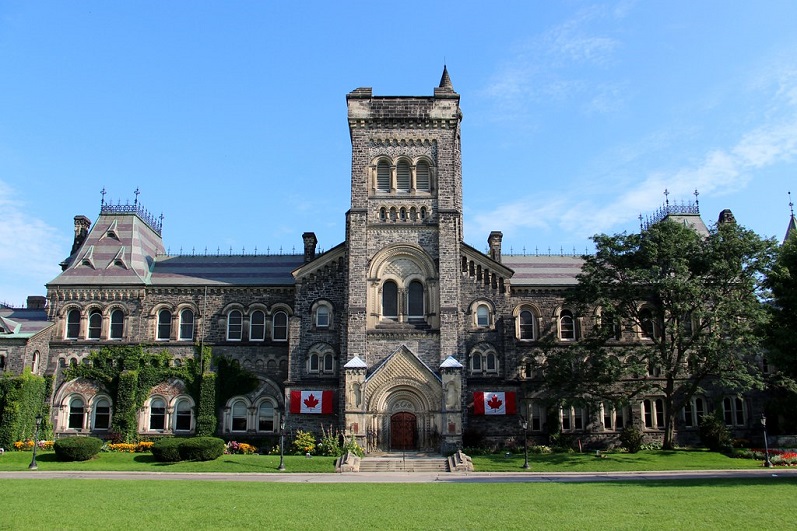
University of Toronto

University of Toronto

The University of Toronto, one of the Top Universities in Canada, was established with a mission to provide transformative education with innovative and cutting edge research techniques. This university in Canada is one of the world’s top research-intensive universities, driven to invent and innovate. The university has three campuses, namely, University of Toronto St. George, University of Toronto Mississauga and University of Toronto Scarborough.

Unlike other universities in Canada, the University of Toronto offers more than a hundred undergraduate, graduate, and professional programs. Also, since the university is affiliated with nine hospitals and 12 community-affiliated hospitals and health-care sites, it provides exceptional teaching and research experiences for students in these institutions.

For Nepalese students in Canada, this means access to world-class education combined with practical, hands-on learning opportunities in the healthcare field. Additionally, the University of Toronto is ranked as one of the top 100 employers in Canada, offering equal job opportunities for people from diverse backgrounds — ranging from recent graduates to experienced senior professionals.

Top Courses in the Top University in Canada: the University of Toronto

Top Courses in the Top University in Canada: the University of Toronto
S.N Programs  Time Duration  Tuition Fees 
1. Master of Arts in Sociology  1 year  CAD 22,000 to 25,000 
2. Master of Arts in Music  2 years  CAD 22,000 to 25,000 
3. Master of Public Health (MPH) 1 to 2 years  CAD 43,000 to 46,000 
4. Bachelors of Arts in Economics  4 years  CAD 54,000 to 60,000  
5. Bachelors of Business Administration  4 years  CAD 56,000 to 60,000 

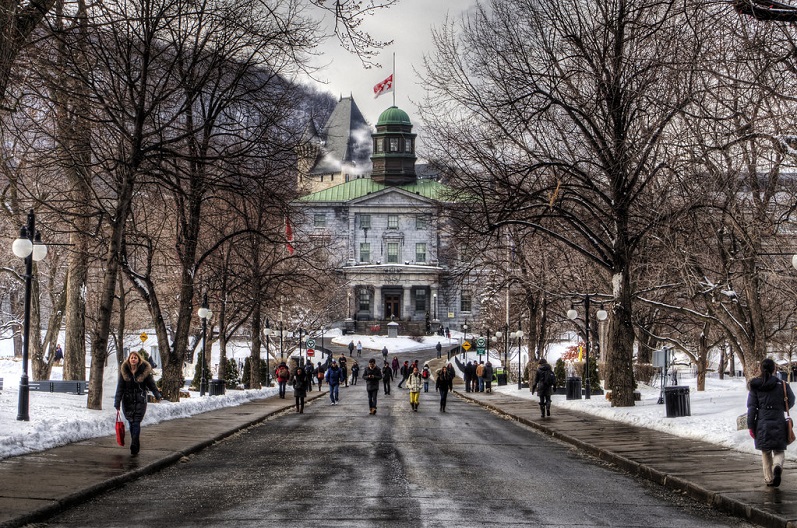
McGill University

McGill University

Established in the year 1821, the McGill University is also one of the top universities in Canada that is best known for higher education. Every year thousands of students from over 150 countries apply for program/courses in McGill University. You might find it interesting to know that the McGill University is the only Canadian institution represented in the World Economic Forum’s Global University Leaders Forum. This university of Canada offers more than 300 degree subjects and thus counts itself as one of Canada’s most internationally diverse institutions and one of the Best Universities in Canada.

The university consists of 10 faculties and schools offering courses in agricultural and environmental sciences, arts, dentistry, education, engineering, law, management, medicine, music, and science. For students who plan to study Canada from Nepal, McGill University stands out as a prestigious choice with diverse academic options. For instance, as a McGill graduate, you get to enjoy a range of exclusive benefits both in Montreal and around the world like, discounts on hotels and train tickets, access to thousands of e-books through the McGill Library, and so on.

Top Courses at one of the Top Universities in Canada: McGill University

Top Courses at one of the Top Universities in Canada: McGill University
S.N Programs  Time Duration  Tuition Fees 
1. Masters of Law (LL.M) 1 to 2 years  CAD 23,000 to 27,000 
2. Masters of Science in Otolaryngology 1.5 to 2 years  CAD 15,000 to 19,000 
3. Bachelor of Science in Architecture  4 years  CAD 19,500 to 23,000 
4. Bachelors of Science in Nursing  4 years  CAD 21,000 to 25,000 
5. Bachelors on Doctor of Dental Medicine (DMD) 4 years  CAD 63,500 to 66,000 

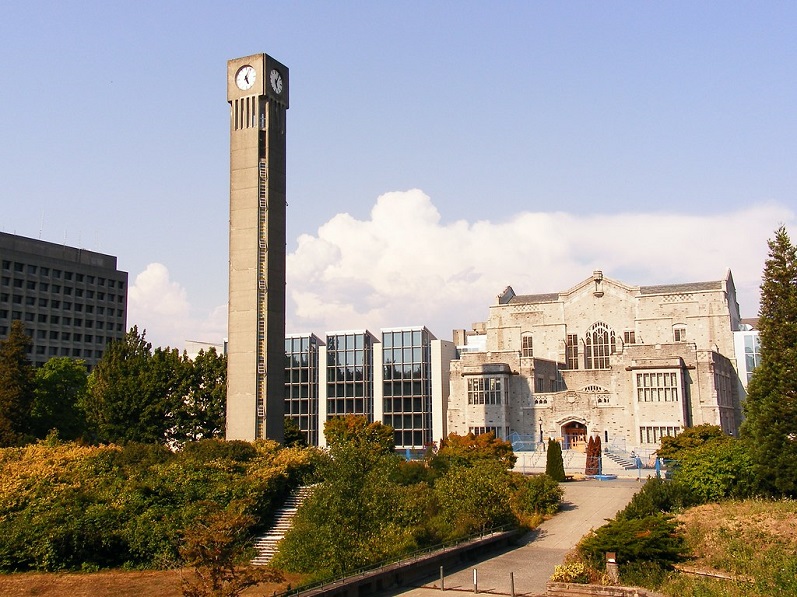
University of British Columbia

University of British Columbia

The University of British Columbia, ranked among the top 20 public universities in the world, is a global center for teaching, learning and research. As one of the Top Universities in Canada, the university aims to create an exceptional learning environment that fosters global citizenship, advances a civil and sustainable society, and supports outstanding research to serve the people of British Columbia, Canada and the world as a whole. This university of Canada has two major campuses in Vancouver and the Okanagan.

That has been successful in attracting, nurturing and transforming more than 65,000 students from Canada and 140+ countries around the globe. These two campuses provide a diverse range of cultural, recreational and social activities for students. Whether you are looking for undergraduate or graduate courses/programs, looking for scholarships, or ready to pursue your higher education, the university has everything for you.

Top programs at the Top Universities in Canada: the University of British Columbia

Top programs at the Top Universities in Canada: the University of British Columbia
S.N Programs Time Duration  Tuition Fees 
1. Master of Data Science in Computational Linguistics (MDSCL) 1 year  CAD 46,500 to 49,000 
2.  Master of Digital Media  1 to 1.5 years  CAD 58,000 to 62,000 
3. LLM – Masters of Law  1 to 2 years  CAD 8,000 to 10,000 
4. Master of Applied Science in Civil Engineering  2 years  CAD 8,000 to 10,000 
5. MA in Psychology  2 years  CAD 8,500 to 10,000 
Top Universities in Canada - university of victoria

University of Victoria 

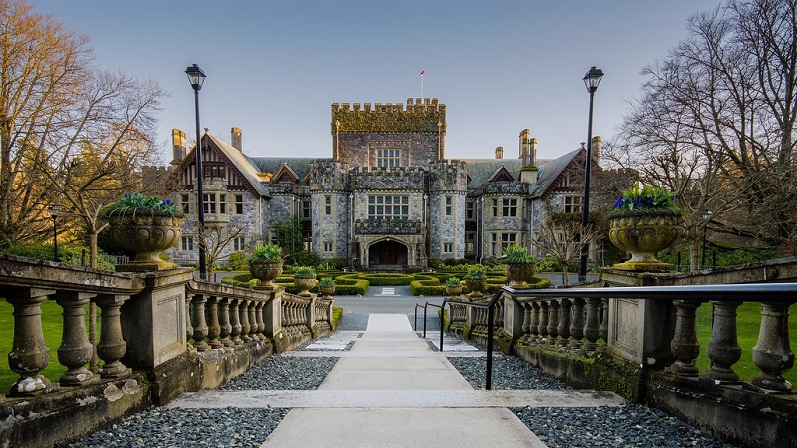
The University of Victoria is a public research university in the British Columbia communities of Oak Bay and Saanich. The university traces its roots to Victoria College, the first post-secondary institution established in the province of British Columbia in 1903. The University of Victoria is considered one of the Top Universities in Canada.

Top Courses in the Top Universities in Canada: the University of Victoria

Top Courses in the Top Universities in Canada: the University of Victoria
S.N Programs  Time Duration  Tuition Fees
1. MA in Physical Education  2-3 years  CAD 4,5000 to 6,000 
2. MSc in Environmental Studies  2 years  CAD 4,500 to 6,000 
3. LLM in Law and Society  1 year  CAD 6,500 to 9,000 
4. MEd in Early Childhood Education  2 years  CAD 6,800 to 8,500
5. MSc in Health Informatics  1.5 to 2 years  CAD 10,000 to 13,000
Royal Roads University

University of Calgary

Started in 1944, The University of Calgary is a public research university in the Canadian city of Calgary. The University is made up of 14 faculties and more than 85 research institutes and centers. The main campus is in the city’s northwest quadrant, along the Bow River, while a smaller south campus is in the city center.

The main campus holds the majority of the research facilities and collaborates with provincial and federal research and regulatory bodies, including the Geological Survey of Canada, which is headquartered close to the campus. The main campus encompasses around 200 acres. The University of Calgary is considered one of the Top Universities in Canada.

Top Courses at one of the Top Universities in Canada: the University of Calgary

Top Courses at one of the Top Universities in Canada: the University of Calgary
S.N Programs  Time Duration  Tuition Fees 
1. Master of Architecture  2 years  CAD 9,000 t0 12,000 
2. Bachelors of Arts in Economics  4 years  CAD 19,000 to 22,000 
3. Bachelors of Science in Actuarial Science  4 years  CAD 19,000 to 21,500 
4. Master of Science in Geomatics Engineering  2 years  CAD 7,000 to 9,000 
5. Master of Nursing  2 years  CAD 9,500 to 12,000 

Requirements to Study in Canada from Nepal

CIC Education Hub has gathered information on study in Canada from Nepal Requirements to make it easier for students wishing to study abroad in Canada. If you’ve been accepted at a college/university in Canada, you need to apply for a student permit and temporary resident visa. Here is the list of documents required while applying for Canadian student visa:

  • Completed student permit application form
  • Letter of acceptance provided by the college/university
  • Valid passport/travel document
  • Two recent passport-size photographs, with specifications of name and date of birth on the back
  • Proof of financial support during your study tenure. You’ll need to show that you have about 10,000 and 11,000 CAD per year for living in the country.
  • A letter of intent
  • If you intend to study in Quebec, you will also need a Certificate acceptation du Québec, English and French translations for your document, a statement from the translator, and a certified copy of the original documents
  • Proof of payment of study permit fee (150 CAD)
  • Proof of English language proficiency if you come from a country whose primary language is not English. Some of the commonly accepted language tests are IELTS, Cambridge English-Advanced, TOEFL, etc.

These are some of the basic requirements to study in Canada from Nepal.

IELTS / PTE Requirements to study in Top Universities in Canada

IELTS Score requirement to study in Top Universities in Canada

  • 6.5 to 7.0 on the IELTS test

PTE Score required to Study in Top University in Canada

  • For diploma programs: overall 45 no less than 36 in each module.
  • For a bachelor’s degree program: overall 50 no less than 45 in each module.
  • For a graduate diploma program or master’s level degree program: overall 65 with no less than 50 in each module.

Cost to Study in Top Universities in Canada: Tuition Fee

Total cost to study in Top Universities in Canada from Nepal ranges somewhere from CAD $8000 to CAD $30,000 on average. Although the answer to “How much does it Cost to Study in Top Universities in Canada from Nepal” totally depends on the type of major, level of study, the University you decide to choose, etc. While prestigious institutions like the University of Toronto or McGill may fall on the higher end of the spectrum, universities like the University of Victoria or University of Calgary may offer more affordable options for Nepalese students in Canada.

Is Canada Good for Nepali Students?

Canada has long been a popular destination for Nepali students due to its world-class education system, cultural diversity, and post-study work opportunities. However, recent news reports and inspections have raised concerns, particularly around challenges in securing part-time jobs and managing the high cost of living. Some Nepali students in Canada have reported difficulty finding employment despite being eligible to work, which has added financial pressure.

That said, Canada still offers significant long-term benefits, such as a globally recognized degree, pathways to permanent residency, and exposure to international work environments. Students are advised to plan carefully, research job markets, and choose study programs with strong co-op or internship opportunities to improve their chances of success.

Conclusion: Top 5 Universities in Canada for Nepalese Students

There are many more expensive as well as more affordable universities in Canada that provide quality education. If you are looking forward to studying at top universities in Canada, Get in touch with us, CIC Education Hub. We’re here to assist you in discovering what you need to know and do to make your goal of studying at top Universities in Canada a reality.

Related information:

FAQs on Top 5 Universities in Canada for Nepalese Students

What is the academic qualification to study in Top Universities in Canada?

Students must have at least a 2.8 GPA or a 60% average to study in top Universities in Canada. However, based on the requirements of the course, each university has a different set of criteria.

Can I study in Top Universities in Canada with low marks?

Yes, there is a chance that you could study in the top University in Canada despite low marks as academic marks is not the sole factor. Your eligibility and admission will also depend on your Test Scores and Language exam scores.

Is higher education expensive in the top Universities in Canada?

Education expenses in top Universities in Canada are not particularly cheap but are reasonably affordable compared to their American and European counterparts.

What are the top 5 Universities in Canada for Nepalese students?

The top 5 Universities in Canada for Nepalese Students are:
University of Toronto
McGill University
University of British Columbia
University of Victoria 
University Of Calgary


Talk with expert